Henry James Stevens

Home page

Appears as:

Born:

Parents:

Unit:

No.:

Rank:

Died:

Grave/Memorial: 
Stevens, Henry J

1887

Richard and Harriet (née Sherlock)

8th Battalion, The Queen's (Royal West Surrey) Regiment

S.779

Private

18 June 1916, 15 CCS, France, aged 29

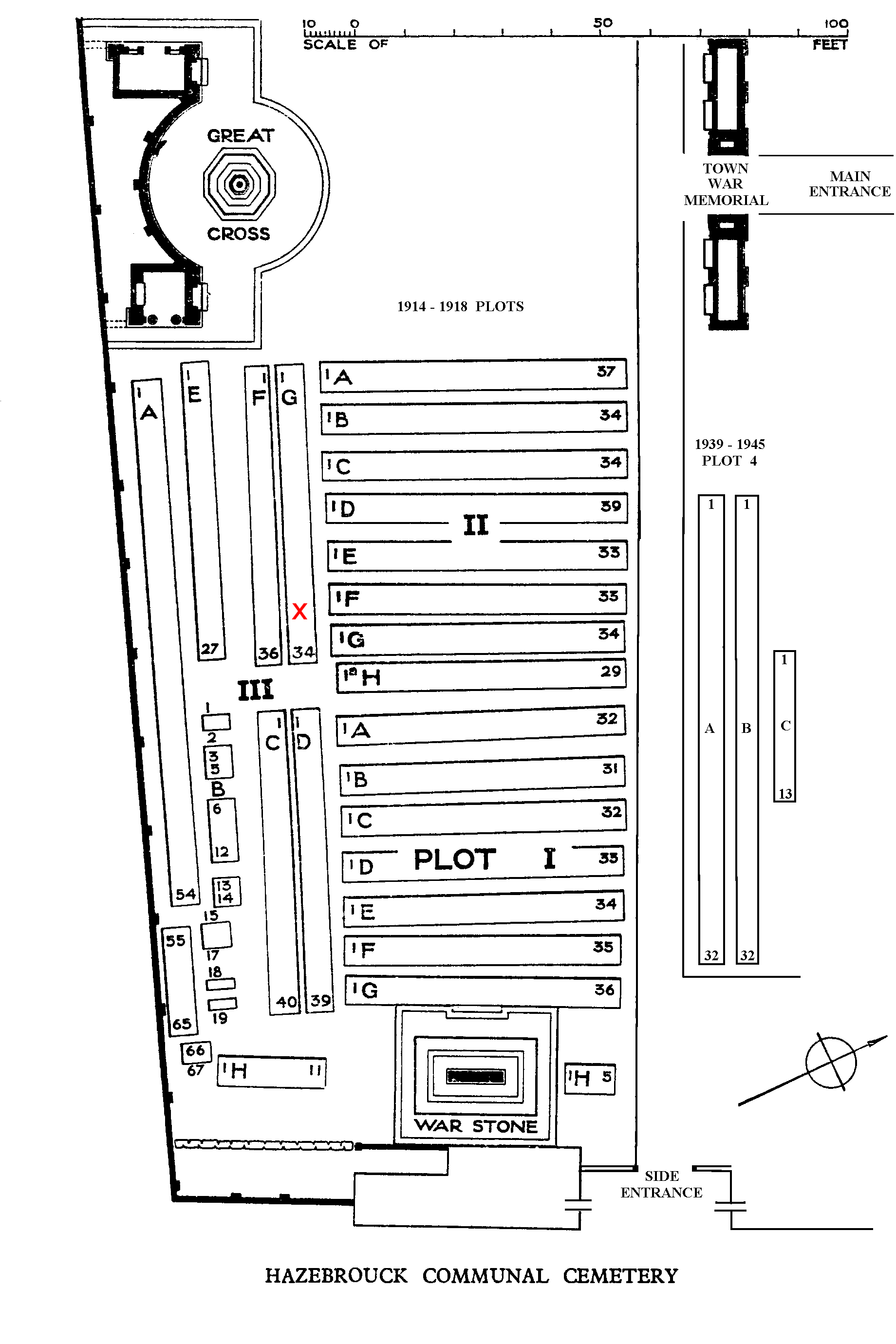
Hazebrouck Communal Cemetery, Hazebrouck, Nord-Pas-de-Calais, France: III. G. 28

      

Biography:
Henry James Stevens was born in 1887 at Pirbright Surrey. He was the son and third (second surviving) child of Richard and Harriet (née Sherlock).
He had two brothers and two sisters.

In the 1911 census, when he was 24, Henry’s occupation is given as ‘painter’ – probably a decorator rather than an artist.
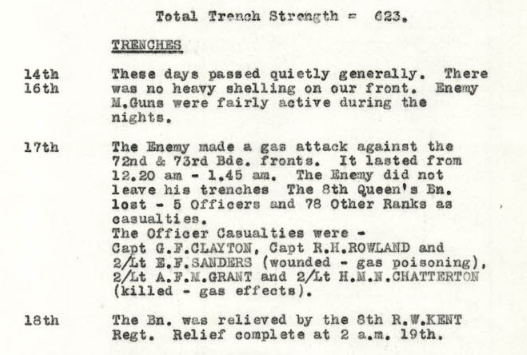
Extract from War Diary June 1916
     

Henry enlisted with The Queen's (Royal West Surrey) Regiment and was
assigned to 8th (Service) Battalion, which was formed at Guildford in September
1914.  He disembarked in France on 31 August 1915.

Henry James Stevens was wounded (probably during the gas attack) and died, on
18 June 1916, at 15th Casualty Clearing Station. He is buried, in grave III. G. 28,
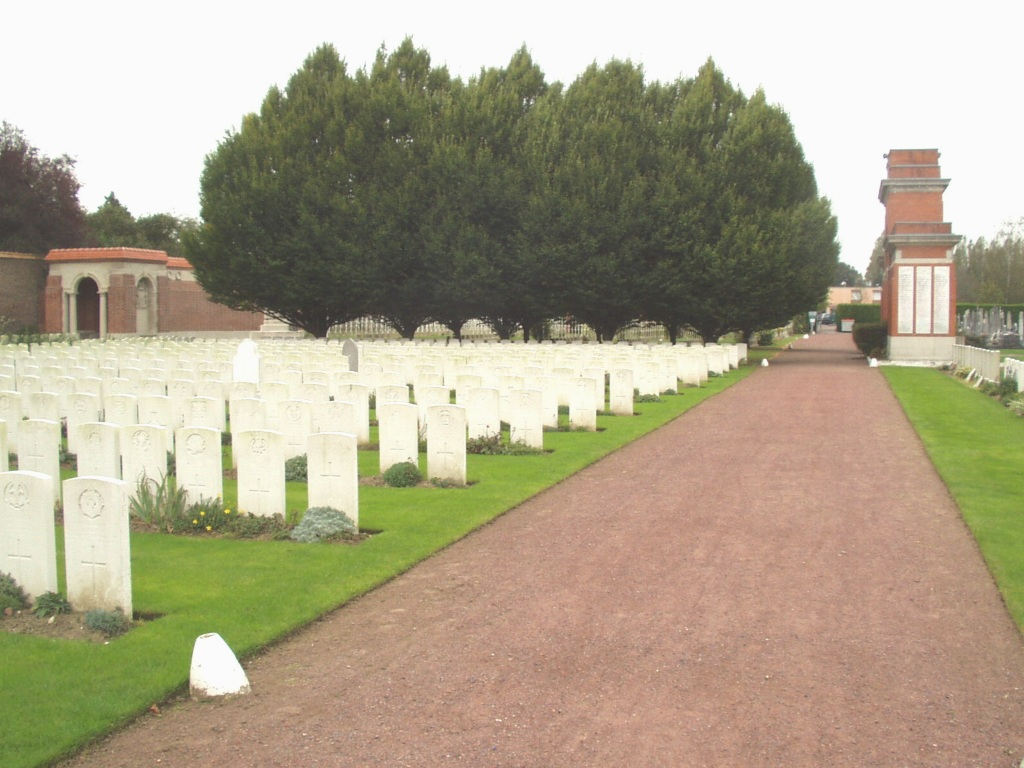
within the Hazebrouck Communal Cemetery, Hazebrouck, France.
The Casualty Clearing Station was part of the casualty evacuation chain, further back from the front line than the Aid Posts and Field Ambulances. It was manned by troops of the Royal
Army Medical Corps, with attached Royal Engineers and men of the Army Service Corps. The job of the CCS was to treat a man sufficiently for his return to duty or, in most cases, to
enable him to be evacuated to a Base Hospital.


From October 1914 to September 1917, casualty clearing stations were posted at Hazebrouck. The Germans shelled and bombed the town between September 1917 and September
1918 making it unsafe for hospitals, but in September and October 1918, No. 9 British Red Cross Hospital was stationed there.

Commonwealth burials began in the communal cemetery in October 1914 and continued until July 1918. At first, they were made among the civilian graves, but after the Armistice these
earlier burials were moved into the main Commonwealth enclosure. The cemetery now contains 877 Commonwealth burials of the First World War (17 of them unidentified) and 86 from
the Second World War (20 of them unidentified).

The Commonwealth plot, for the construction of which the town of Hazebrouck contributed 20,000 francs, was designed by Sir Herbert Baker.